In this article, I would like to elaborate more about the Taraba State University (TASU) cut-off mark 2026/2027. If you’ve been searching for the Taraba State University JAMB cut-off mark or its departmental aggregate, then you are on the right page. This is to inform the general public that the management of the institution has announced the 2026/2027 cut-off mark.
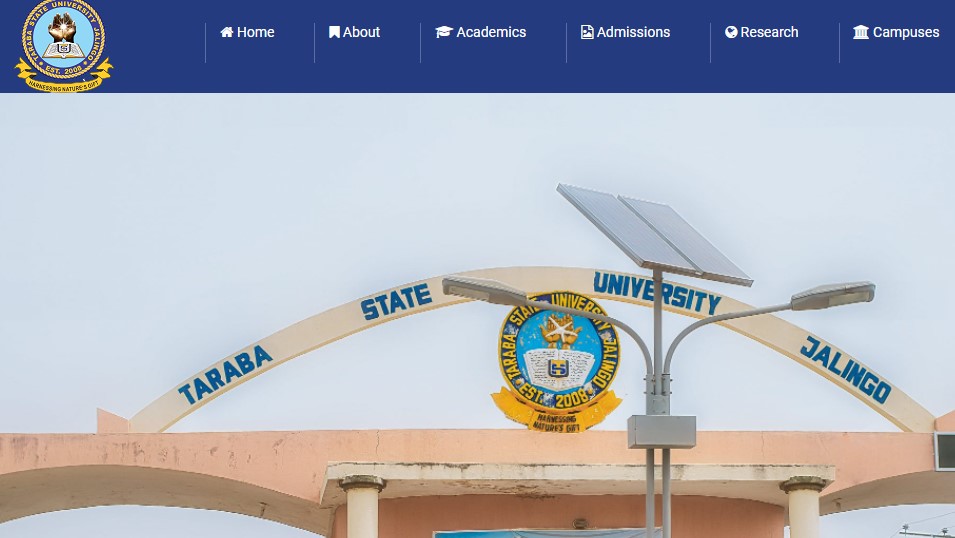
This cut-off mark is for those who chose TASU as their first choice in the last Unified Tertiary Matriculation Examination (UTME) and those who didn’t choose the school but were willing to apply for a change of institution. Also, this article will help students preparing for the upcoming JAMB & POST UTME examination to know the minimum score expected of them to have before processing admission.
What is Taraba State University’s JAMB cut-off mark?
The Taraba State University JAMB cut-off mark is the general cut-off mark set as a benchmark for all courses offered in the institution. TASU Jamb’s cut-off mark for the 2026/2027 academic session is 150, so for a student to register for the Taraba State University POST UTME, he or she must score nothing less than 150 in the concluded JAMB examination. However, it’s advisable to score more than the required cut-off mark to boost your chances of gaining admission into the university.
Faculty of Agriculture
- Animal Science -150 & Above
- Agricultural Economics and Extension -150 & Above
- Agronomy -150 & Above
- Forestry & Wildlife Management -150 & Above
Faculty of Art
- Arabic -150 & Above
- English Language -150 & Above
- French -150 & Above
- Hausa -150 & Above
- History & Diplomatic Studies -150 & Above
- Linguistics/English -150 & Above
- Linguistics/French -150 & Above
- Theatre & Film Studies -150 & Above
Faculty of Communication and Media Studies
- Advertisement -150 & Above
- Broadcasting -150 & Above
- Journalism and Media Studies -150 & Above
- Mass Communication –180 & Above
- Public Relations -150 & Above
Faculty of Computing
- Computer Science -180 & Above
- Data Science -150 & Above
- Information & Communication Technology -150 & Above
- Software Engineering -150 & Above
Faculty of Education
- Agricultural Science and Education -150 & Above
- Business Education -150 & Above
- Education & Biology -150 & Above
- Education & Chemistry -150 & Above
- Education & Christian Religious Studies -150 & Above
- Education & Computer Science -150 & Above
- Education & Economics -150 & Above
- Education & English Language -150 & Above
- Education & Geography -150 & Above
- Education & History -150 & Above
- Education & Integrated Science -150 & Above
- Education & Islamic Studies -150 & Above
- Education & Mathematics -150 & Above
- Education & Physics -150 & Above
- Education & Political Science -150 & Above
- Education & Social Studies -150 & Above
- Educational Administration & Planning -150 & Above
- Guidance and Counseling -150 & Above
- Health Education -150 & Above
- Home Economics & Education -150 & Above
- Human Kinetics -150 & Above
- Library & Information Science -150 & Above
- Primary Education Studies -150 & Above
- Social Studies -150 & Above
- Special Needs Education -150 & Above
- Sustainable Development Studies -150 & Above
- Technology Education -150 & Above
Faculty of Engineering
- Agriculture & Bio-Resource Engineering -150 & Above
- Civil Engineering -170 & Above
- Electrical & Electronic Engineering -170 & Above
- Mechanical Engineering -170 & Above
- Mining & Mineral Processing Engineering -150 & Above
Faculty of Health Science
- Environmental Health Science -160 & Above
- Human Anatomy -150 & Above
- Human Physiology -150 & Above
- Nursing Science -210 & Above
- Public Health -180 & Above
- Radiology -150 & Above
Faculty of Law
- Law -230 & Above
Faculty of Management Science
- Accounting -170 & Above
- Banking and Finance -150 & Above
- Business Administration -170 & Above
- Entrepreneurship -150 & Above
- Public Administration -160 & Above
- Tourism Studies -150 & Above
Faculty of Religion & Philosophy
- Sharia -150 & Above
- African Traditional Religion -150 & Above
- Christian Religious Studies -150 & Above
- Christian Theology -150 & Above
- Classics -150 & Above
- Islamic Studies -150 & Above
- Philosophy -150 & Above
- Religious Studies -150 & Above
Faculty of Science
- Biochemistry -150 & Above
- Biotechnology -150 & Above
- Botany -150 & Above
- Chemistry -150 & Above
- Industrial Chemistry -150 & Above
- Mathematics -150 & Above
- Microbiology -160 & Above
- Physics -150 & Above
- Statistics -150 & Above
- Zoology -150 & Above
Faculty of Social Science
- Geography -150 & Above
- Meteorology and Climate Studies -150 & Above
- Peace Studies and Conflict Resolution -150 & Above
- Political Science and International Relations -160 & Above
- Sociology -150 & Above
- Survey and Geo-Information -150 & Above
Taraba State University departmental cut-off mark
The Taraba State University departmental cut-off mark is the official benchmark score set to process admission for each course. This cut-off mark is decided by the management of each faculty after the successful conclusion of the institution’s POST UTME. Meanwhile, the mark is determined by the performance of students after the examination or screening. Candidates should note that not all school releases cut off marks to process admission after the conclusion of the Post UTME examination or screening.
This article will be updated once the management of the Taraba State University (TASU) releases the cut-off mark that will be used in processing 2026/2027 admission.
How to calculate your screening score
Every aspirant candidate who participated in the Taraba State University Post UTME / Screening must know how to calculate their aggregate score for confirmation. Follow the simple steps below to calculate your screening score
- Divide your JAMB score by 8
- Divide your post utme score by 2
- After which you add both of them together.
For example; You score 300 in JAMB and 80 in post utme, that means;
300/8 = 37.5
80/2 = 40
i.e 37.5 + 40 = 77.5
However, some institutions only use post utme result to admit candidates, while some use O’level and Jamb result to determine student screening results. Click here to read more about aggregate score calculation.
Alternative Links:
IF YOU FIND THIS ARTICLE HELPFUL, SOMEONE MIGHT ALSO NEED IT, SO DON’T HESITATE TO SHARE.
THANKS FOR VISITING NEWSEDUNG. LEAVE A COMMENT BEFORE CLOSING THE TAB.
This is so great
What is the scouring Taraba for Jabm
That’s Awesome
That’s awesome at least student can go to school
What about people with diploma result and didn’t feel DE and with jamb number